Showing posts with label Business. Show all posts

Monday, August 19, 2013

Confidentiality Provisions in Severance Agreements are Enforceable


Many employers include confidentiality provision in their severance agreements. However, they worry about whether confidentiality provisions are enforceable. According to a recent case, they are enforceable.

The case of Hallmark Cards, Inc. v. Murley, 703 F.3d 456 (8th Cir. 2013), supports employers seeking to enforce such confidentiality provisions. In Hallmark Cards, the employer sued its former vice president of marketing, who received a severance package of $735,000 after her position was eliminated due to a corporate restructuring. The jury found that the former employee had breached the confidentiality provision of the severance agreement by disclosing Hallmark’s confidential information to her new employer, a competitor. The jury awarded Hallmark Cards the full value of the severance package and the employee’s compensation paid by her new employer. The former employee appealed.

On appeal, the former employee argued that she had complied with some provisions of the severance agreement and therefore she should not have to pay back the full severance amount. The former employee also argued her former employer was not entitled to any of her compensation from her new employer.

Hallmark argued that it was entitled to the full amount of damages awarded because the only reason the new employer paid her compensation was because she provided the new employer with Hallmark’s confidential information.

The Eighth Circuit Court of Appeals upheld the jury’s award of a full refund to Hallmark of its $735,000 severance payment, but held Hallmark was not entitled to the award of the former employee’s compensation from her new employer. The court rejected the former employee’s argument that Hallmark got some value for the severance agreement and thus was not entitled to get all of its severance payment back. The Eighth Circuit reasoned that the confidentiality provision was the primary purpose of the agreement and that the language of the agreement clearly indicated that preserving confidentiality was a priority.

The Eighth Circuit held, however, that Hallmark was not entitled to be put in a better position than it would have been in if the former employee had not breached the severance agreement. Accordingly, Hallmark was not entitled to the former employee’s compensation from her new employer.

Conclusion

The Hallmark Cards case shows employers can enforce properly drafted confidentiality agreements in severance agreements. To have the best chance for success, employers should have their attorneys draft or review the confidentiality provisions prior to giving the severance agreement to the employee, and then call their attorneys if they obtain evidence that a former employee has breached the confidentiality provision.

If you are a Nebraska employer or employee wondering about whether a confidentiality provision can be enforced, contact Madathil Law Office today for a free consultation.

Angela Y. Madathil
Madathil Law Office, LLC

Nebraska Business and Employment Lawyer
Serving clients throughout Nebraska

Image from here.

T: 402.807.3174

DISCLAIMER: The information in this blog post (“post”) is provided for general informational purposes only, and may not reflect the current law in your jurisdiction. By visiting this website, blog, or post you understand that there is no attorney client relationship between you and Madathil Law Office LLC and website publisher. No information contained in this post should be construed as legal advice from Madathil Law Office LLC , or the individual author, nor is it intended to be a substitute for legal counsel on any subject matter. No reader of this post should act or refrain from acting on the basis of any information included in, or accessible through, this Post without seeking the appropriate legal or other professional advice on the particular facts and circumstances at issue from a lawyer licensed in the recipient’s state, country or other appropriate licensing jurisdiction.


Thursday, June 13, 2013

Pre-Employment Inquiries and Arrest & Conviction


You have may heard in the news lately that the EEOC has filed lawsuits against BMW and Dollar General based on what the EEOC believes were discriminatory practices based on employee background checks.  Nebraska employers can still run background checks, however it is helpful to avoid liability if employers think about the types of convictions that would be a problem for their business, and the age of convictions that are still a problem.  For example, if you run a home health equipment company a conviction ten years ago for possession of marijuana might not be very relevant.  However, a conviction for identity theft in the last five years could be very important.

The EEOC has provided some guidance available here.  There is no Federal law that clearly prohibits an employer from asking about arrest and conviction records. However, using such records as an absolute measure to prevent an individual from being hired could limit the employment opportunities of some protected groups and thus cannot be used in this way.

Since an arrest alone does not necessarily mean that an applicant has committed a crime the employer should not assume that the applicant committed the offense. Instead, the employer should allow him or her the opportunity to explain the circumstances of the arrest(s) and should make a reasonable effort to determine whether the explanation is reliable.

Even if the employer believes that the applicant did engage in the conduct for which he or she was arrested that information should prevent him or her from employment only to the extent that it is evident that the applicant cannot be trusted to perform the duties of the position when considering the nature of the job, the nature and seriousness of the offense, and the length of time since it occurred.  This is also true for a conviction.

The Fair Credit Reporting Act (FCRA) imposes a number of requirements on employers who wish to investigate applicants for employment through the use of consumer credit report or criminal records check. This law requires the employer to advise the applicant in writing that a background check will be conducted, obtain the applicant's written authorization to obtain the records, and notify the applicant that a poor credit history or conviction will not automatically result in disqualification from employment.

The EEOC also issued a fifty page in depth EEOC Enforcement Guidance that gets into a lot of the specific practices that the EEOC is investigating.  One helpful portion of the guide was the section on Employer Best Practices.

The following are examples of best practices for employers who are considering criminal record information when making employment decisions.

• Eliminate policies or practices that exclude people from employment based on any criminal record.

• Determine the specific offenses that may demonstrate unfitness for performing such jobs.

o Identify the criminal offenses based on all available evidence.

• Determine the duration of exclusions for criminal conduct based on all available evidence.

If you are a Nebraska small business owner, or employer, and you have questions about how you can legally use background checks in screening applicants for a job, consider contacting Madathil Law Office.  We offer free consultations.

Angela Y. Madathil
Madathil Law Office, LLC
Nebraska Business and Employment Attorney

Serving clients throughout Nebraska.

In Omaha                                         In Lincoln
1625 Farnam Street #830                  285 South 68th Street Place, Suite 322
Omaha, NE 68102                            Lincoln, NE 68510

T: 402.577.0686
F: 402.415.0635

Image from here.

Thursday, June 6, 2013

Cobra Applies to Nebraska Small Businesses


The federal Consolidated Omnibus Budget Reconciliation Act ("COBRA") allows employees of "qualified employers"—those employers having 20 or more employees—to continue the health insurance they get from the employer's group plan under specific circumstances like termination or death.  For those Nebraska employers who feel relieved because they have fewer than 20 employees, there is some bad news.  Under Nebraska law, Neb. Rev. Stat. § 44-1640 et seq., employers with fewer than 20 full-time and full-time equivalent employees have the same obligations as those employers who are covered under COBRA.

What does this mean for Nebraska small business owners?
Under Nebraska law, those employers "not . . . subject to section 4980B of  the Internal Revenue Code" must provide the same option for continuing  coverage in the event of termination or death of a covered employee.  Section 4980B is the 20-employee limit to COBRA. In other words, Nebraska's "Little COBRA" applies to smaller employers to whom COBRA does not apply.

What are Nebraska small business owners required to do under "Little Cobra"?
The text of Nebraska's "Little COBRA" law states:  "An employer . . . policy or contract delivered or issued for delivery in this state which provides coverage to a group . . . which provides hospital, surgical, or major medical coverage, or any combination of such coverages, on an expense-incurred or service basis by an insurance company or health maintenance organization for employees or their families . . . shall provide that an employee whose [coverage] would otherwise be terminated because of the involuntary termination of employment [or death] of such employee, for reasons other than misconduct in connection with employment, shall be entitled to continue such coverage subject to the provisions of the group policy or contract . . . ."

This means that an employee who dies or is terminated—unless the employee is terminated for misconduct—is entitled to continue his or her coverage and coverage for his or her family under Nebraska's "Little
COBRA" laws.

Depending upon the circumstances under which the employee or employee's surviving spouse is exercising "Little COBRA" rights, the employer is obligated to allow the employee or the employee's surviving spouse to continue coverage pursuant to the statutes. If the employee has been terminated for reasons other than misconduct, the employee is allowed to maintain his or her single or family health coverage, at the employee's expense, until the earliest of the following:
1. 6 months after the coverage would have terminated;
2. The date the employee is eligible for other group coverage;
3. Any month in which the employee elects not to pay the premium;
4. The date the employee converts to an individual or family policy or contract; or
5. The date on which the group plan or HMO agreement is terminated in its entirety.

Upon the death of the employee, the employee's surviving spouse and/or surviving children are entitled to continued coverage under the employer's group plan, until the earliest of the following:
1. The date the surviving spouse or dependents qualify for another coverage;
2. Any month in which the surviving spouse or dependents fail to pay the premium;
3. The date the surviving spouse or dependents convert to an individual or family policy or contract;
4. The date on which the group plan or HMO agreement is terminated in its entirety; or
5. 1 year after the death of the employee.

Also note that as a Nebraska employer, you are required to give 10-days' notice to the employee or the employee's surviving spouse and/or dependents of the right to this continuing coverage. The notice must be sent via certified mail, return receipt requested, and it must contain the statutory requirements in sections 44-1641 or 44-1644, depending upon whether the employee was terminated from employment or died. If the employee elects to continue coverage after termination, the employee has 10 days to send the premium payment to the carrier. In the event of the employee's death, the surviving spouse and/or dependents of the employee have 31 days to make the election to continue coverage and submit the premium payment to the carrier.

For those Nebraska employers who thought they were off the hook because of COBRA's 20-employee minimum, Nebraska law requires you to permit the employee or surviving spouse and dependents to elect to pay for continued coverage. In an ever-changing world of health care reform, it is a good idea to stay in front of these issues.

If you are a Nebraska employer and you have questions about whether you need to offer Cobra benefits to employees, contact Madathil Law Office for a free consultation.

Angela Y. Madathil
Madathil Law Office, LLC
Nebraska Business and Employment Attorney

Serving clients throughout Nebraska.

In Omaha                                         In Lincoln
1625 Farnam Street #830                  285 South 68th Street Place, Suite 322
Omaha, NE 68102                            Lincoln, NE 68510

T: 402.577.0686
F: 402.415.0635

Image from here.

Monday, May 27, 2013

Nebraska Mineral Interests Become Dormant Owners Fail to Take Action


In Gibbs Cattle Co. v. Bixler, the Nebraska Supreme Court considered whether Nebraska oil, gas, and mineral interests had been abandoned or become dormant.   In Nebraska you generally must transfer mineral interests, or take some action to develop the property, within twenty-three years, or risk losing the interest.

The Nebraska Supreme Court gave some guidance in the Gibbs Cattle Co. case indicating that a transfer even through the probate transfer can be a transfer to preserve Nebraska mineral interests. 

Gibbs Cattle Co. is the surface owner of various tracts of land in Sioux County, Nebraska. Gibbs sued the owners of severed mineral interests in those tracts under Nebraska’s dormant mineral statutes (See Neb. Rev. Stat. §§ 57-228 to 57-231 (Reissue 2010)) to reacquire their allegedly abandoned interests. Mineral interests are deemed abandoned unless the “record owner” has taken certain steps to publicly exercise his or her ownership rights during the 23 years preceding the surface owner’s suit.   See § 57-229.  

This case primarily involved two issues: 


(1) whether the “record owner” may be determined only from  the register of deeds in the county where the interests are located or also from other public records, such as probate records in the county; and (2) whether an amended complaint adding, rather than changing (i.e., substituting), a new party defendant may relate back to the original complaint.

In interpreting the relevant statutes, the Nebraska Supreme Court concluded that the “record owner” of mineral interests, as used in § 57-229, includes an individual identified by probate records in the county where the interests are located.  The Court also concluded that Neb. Rev. Stat. § 25-201.02(2) applies only to an amendment that “changes the party or the name of the party” and that refers to a substitution, rather than to an addition, of parties.  The Supreme Court reversed the district court’s contrary rulings.


Both Gibbs and Margaret moved for summary judgment. Gibbs argued that John, the record owner, had not publicly exercised his ownership rights in the mineral interests in the 23 years prior to Gibbs’ complaint. As such, Gibbs argued that  John had abandoned those rights and that the mineral interests should vest with Gibbs, the surface owner. Margaret argued that John’s conveyance of the mineral interests to her through 
his will was a public exercise of ownership. Margaret also argued that based on the probate records, she was the “record owner” of the mineral interests, and that her 23 years had not yet elapsed.The court found for Gibbs. The court reasoned that John was the record owner of the mineral interests because he was the person listed in the register of deeds. And the court determined that although John’s mineral interests transferred through his will,3 this was not a public exercise of ownership because that occurred by operation of law rather than by John’s action. Margaret does not challenge this latter determination on appeal


Record Owner

Section 57-229 sets forth various ways that the “record owner” of mineral interests may exercise his or her ownership rights and thereby avoid abandonment of his or her interests:

A severed mineral interest shall be abandoned unless the record owner of such mineral interest has within the 
twenty-three years immediately prior to the filing of the action provided for in sections 57-228 to 57-231, exercised publicly the right of ownership by 
(1) acquiring, selling, leasing, pooling, utilizing, mortgaging, encumbering, or transferring such interest or any part thereof by an instrument which is properly recorded in the county where the land from which such interest was severed is located; or
(2) drilling or mining for, removing, producing, or withdrawing minerals from under the lands or using the geological formations, or spaces or cavities below the surface of the lands for any purpose consistent with the rights conveyed or reserved in the deed or other instrument which creates the severed mineral interest; or 
(3) recording a verified claim of interest in the county where the lands from which such interest is severed are 
located. . . . The interest of any such owner shall be extended for a period of twenty-three years from the date of any such acts[.]


The answer is not obvious.  But the Court concluded that “record 
owner” should be construed to include an owner identified through the probate records of the county in which the mineral interests are located. We reach this conclusion for several reasons. Most notably, the Legislature narrowly defined the term “record owner” in § 19-4017.01 as “the fee owner of real property as shown in the records of the register of deeds office in the county in which the business area is located.” 
While that definition does not control here, it does shed light on the issue—the intent of the Legislature may be derived from both the words that it used in a statute and those that it did not.17 

That the Legislature narrowly defined “record owner” in § 19-4017.01 indicates that it is not the ordinary meaning of the term. And because the Legislature did not similarly define the term in the dormant mineral statutes, it seems likely that the Legislature intended a different and broader meaning for the term in § 57-229.  Though Nebraska case law had not specifically addressed this issue, State v. $1,94718 provided some support for the Court's conclusion. In that case, the statute included the phrase “owner of record,” which we equated to “record owner.” Applying Black’s Law Dictionary definition, we stated that “the second paragraph of [the statute] would apply only to persons whose  ownership of seized property is a matter of public record.”19

Margaret was identified as an owner through probate records in the county where the interests were located. Those qualify as public records, and so $1,947 supports the conclusion that Margaret was a “record owner.”  Moreover, unlike the district court, the Nebraska Supreme Court believed that this construction was consistent with the language and purpose of the dormant mineral statutes. It is consistent with the statutes’ language because the Legislature did not see fit to narrowly define the term as it had in § 19-4017.01. As to being consistent with the statutes’ purpose, the Court acknowledged that the purpose of the dormant mineral statutes was “to address title problems that developed after mineral estates were fractured.”20  But the text of the dormant mineral statutes also demonstrates that the Legislature balanced this purpose with protecting owners’ property rights.  This balancing is evident from the statutes themselves. 
Abandonment does not automatically occur after a set time, but only if and when a surface owner files suit; it is relatively easy for a record owner to publicly exercise his or her ownership rights; and the statutes provide for a fairly lengthy 23-year period of nonuse before a record owner’s rights may be deemed abandoned.21 Construing “record owner” to include an owner identified through probate records in the county where 
the interests are located is consistent with the dormant mineral statutes’ purpose—it still allows for clearing title records. But that construction also protects identifiable property rights. In other words, much like the statutes themselves, this construction of “record owner” balances the desire to clear title records with protecting identifiable property rights.


But the dormant mineral statutes result in a forfeiture of property, and “‘equity abhors forfeitures.’”24 As this is an equitable case,25 if any doubt remains as to the meaning of “record owner,” it should be construed against forfeiture.26

The Nebraska Supreme Court held that the “record owner” of mineral interests, as used in § 57-229, may be determined not only from the register of deeds, but also from probate records in the county where the interests are located. Margaret therefore qualified as a “record owner” within the meaning of § 57-229. 
And because she acquired her interest in 1996, her 23-year statutory period has not elapsed and her property cannot be deemed abandoned.

If you have been served a Complaint regarding mineral interests under land in Nebraska, you should contact an attorney and determine if any probate transfers have been made.  As in the case above, those owners indicated in probate records have preserved rights.  Contact Madathil Law Office, a Nebraska oil and gas attorney, for a free consultation regarding your Nebraska mineral interests. 


Angela Y. Madathil
Madathil Law Office, LLC
Nebraska Oil and Gas Attorney

Serving clients throughout Nebraska.

In Omaha                                         In Lincoln
1625 Farnam Street #830                  285 South 68th Street Place, Suite 322
Omaha, NE 68102                            Lincoln, NE 68510

T: 402.577.0686

Image from here.


Friday, May 24, 2013

Health Care Reform: Planning Now for 2014 Deadlines

The Affordable Care Act (the “ACA” often called Obama Care)  makes extensive changes to the health insurance landscape. Some of these changes are already in force.  However, the most significant provisions of the ACA become effective on January 1, 2014. This includes the “pay or play mandate,” the individual coverage mandate, and certain significant taxes and fees that are imposed on employers.
While many Nebraska small businesses and Nebraska employers are already in the midst of planning for these significant changes, other employers have yet to examine how these new requirements will impact business operations, health coverage costs, benefit plan design, and coverage of employees. Nebraska employers are required to notify existing employees of their coverage options by October 1, 2013 (See Technical Release No. 2013-02 for a discussion of this notice requirement). 
Practically speaking, this means that employers must have a compliance plan in place well before the January 1, 2014 effective date of these changes. Given the significant impact of these requirements, and given the fast-approaching deadlines, we have been urging employers to begin analyzing these issues now so they have a strategy in place that will enable them to continue normal business operations while complying with the myriad of complex new requirements. Key decisions that need to be made well in advance of 2014 include:
Whether to continue offering group health coverage on/after 2014. We have not seen a significant push from employers to completely eliminate their health plans. However, the cost increases in 2014 are significant enough that many employers are analyzing this option and considering it for the future.

If the employer will continue to offer coverage, what (if any) steps the employer should take to offset the significant cost increases associated with the new requirements. The ACA requirement to provide coverage to all full-time employees will result in a significant cost increase, especially for employers who do not currently provide coverage to these employees. Even if an employer currently provides coverage to all full-time employees, the individual mandate will cause more employees and dependents to enroll, thereby increasing costs.  There are also significant taxes (e.g., the transitional reinsurance fee and the patient-centered outcomes research fee) that will further raise costs for employers. For many employers, these cost increases are prohibitive. Accordingly, Nebraska employers should analyze whether it is prudent/necessary to make plan design changes, revise employment practices, implement wellness programs, and/or take other steps to offset cost increases.

Whether any action needs to be taken to avoid the pay or play penalties. Generally, the pay or play penalties apply to employers that either (a) do not offer coverage to at least 95% of their full-time employees or (b) offer coverage to at least 95% of their full-time employees, but such coverage is either not affordable or does not provide minimum value. Accordingly, employers need to analyze issues such as:

  • Who qualifies as a full-time employee? To make this determination, employers must look at the hours its employees work during a “standard measurement period” beginning in 2013. Accordingly, employers should already be reviewing this issue.
  • Is coverage offered to at least 95% of these employees?
  • If not, what plan design or employment practice changes must be made to alter this result?
  • Does the current plan offer affordable coverage that provides minimum value?
These are just a few of the issues that employers should be working through before 2014. While many of the new requirements are very complex, we believe there is still time to properly analyze these questions and develop a solid compliance strategy that will help control inevitable cost increases, while still complying with the new requirements. However, time is of the essence because 2014 is right around the corner.
If you are a small business in Nebraska, or just a Nebraska employer, and you would like to speak to an attorney regarding how Obama Care and the ACA will affect your business, contact Madathil Law Office for a free consultation. 
Angela Y. Madathil
Madathil Law Office, LLC
Employment and Business Law

Serving clients in Omaha and Lincoln

In Omaha                                         In Lincoln
1625 Farnam Street #830                  285 South 68th Street Place, Suite 322
Omaha, NE 68102                            Lincoln, NE 68510

T: 402.577.0686
F: 402.415.0635

Image from here.

Wednesday, May 15, 2013

U.S. Supreme Court Upholds Dismissal of FLSA Collection Action Claim


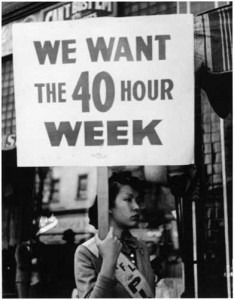
I have had clients who were not paid overtime in Nebraska and they should have been.  Ultimately, if an employee is not exempt from the Fair Labor Standards Act (FLSA) minimum wage or overtime provisions, these employees should be paid minimum wage and overtime if they work more than forty hours in a week.  
Businesses that are faced with a lawsuit under the FLSA should keep in mind that many times these cases are filed on behalf of the named person bringing the lawsuit, as well as other employees similarly situated.  These cases brought on behalf of a group are known as collective actions.
In a case decided on April 16, 2013, the United States Supreme Court determined what happens to such a lawsuit when the claims of the person bringing the suit become moot. Genesis Healthcare Corporation v. Symczyk, No. 11-1059 (Apr. 16, 2013).  In that case, the employee alleged that her employer had improperly failed to pay her, and others, for time worked during breaks.  Before any other employee joined the lawsuit, the employer offered to pay her the full amount of her claim.  The employee rejected that settlement offer. The lower courts and the Supreme Court held that by offering to fully compensate the employee the employer had mooted her claim making her no longer eligible to seek relief for herself.  The employee argued, however, that she was still entitled to pursue her lawsuit on behalf of fellow employees with the same types of claims.
Although not all of the Supreme Court Justices agreed, the Court decided that the employee was no longer eligible to pursue claims on behalf of her fellow employees.  Because no other employee had yet joined the lawsuit, the only live claim was that of the employee who filed the case.  Once her claim was determined to no longer exist, the Court held that there was no longer any present claim remaining to resolve and decided that the whole case was properly dismissed.  The Court indicated that the result would have been different if other employees had already joined the litigation before the filing employee’s claim became ineffective.
Four of the nine Justices dissented from the Court’s decision because they reasoned the employee’s own claim did not become ineffective merely because the employer made a settlement offer to pay her full claim.  Justice Kagan’s dissenting opinion makes for a colorful read, in which she notes that the majority resolved only “an imaginary question.”
Nebraska businesses faced with lawsuits alleging FLSA violations, particularly those seeking collective action status, can involve complicated procedural issues.  Nebraska employers should take care to consider pertinent strategic options, including potentially offering a settlement to the named plaintiff.
If you are a Nebraska business owner faced with an employment law claim, contact Madathil Law Office for a free consultation for guidance on how to respond to the situation.
Angela Y. Madathil
Madathil Law Office, LLC
Employment and Business Law

Serving clients in Omaha and Lincoln

In Omaha                                         In Lincoln
1625 Farnam Street #830                  285 South 68th Street Place, Suite 322
Omaha, NE 68102                            Lincoln, NE 68510

T: 402.577.0686
F: 402.415.0635

Image from here.

Monday, May 13, 2013

Legal Lessons for Nebraska Start-Up Businesses - Part 2 - Protecting Trade Secrets

Madathil Law Office regularly advises Nebraska businesses regarding issues that come up for them.  Start-up companies, and any company with technology or secret information, have a few unique issues that must be addressed.

Our firm is hoping to educate the Nebraska business community about these issues with a series of posts.  You can read the first post in the series here, where we discussed documenting joint ventures and other agreements.

The second post in the series is dedicated to advising Nebraska businesses that they must protect their trade secrets. A trade secret may include any information, process or technology that provides economic value to the secret holder that is not readily known to others.  Trade secrets are different from patents in part because they are broader and must be kept secret. Virtually every startup will have many valuable trade secrets which may or may not someday be patented.

Each Nebraska company needs to take steps to internally identify its trade secrets.  The chief technology or legal officer should encourage employees to identify and document the company's key trade secrets.


Once documented, you should take reasonable measures to protect the trade secrets, including:
(1) limiting employee and third party access,
(2) marking key documents and electronic files as confidential,
(3) and requiring special password protection.
Actions To Take with Employees

Employees should sign an employment agreement mandating that company secrets be used only for company business. The same language protecting trade secrets should also be included in joint venture agreements with other companies and third parties.

When employees leave the company, they (and often their new employer) should be advised of the prohibition on using the company's trade secrets at their next job. If there's any suspicion of improper use of the trade secrets, segregate the former employee's computer and files, and hire a forensics expert to investigate the situation. Engage in defensive hiring. Make sure new employees understand they are being hired for their brainpower and skill, not to obtain trade secrets from former employers. Startups are often damaged -- sometimes irreparably -- by over-zealous employees who believe they need to shortcut the development process by using confidential, trade secret information from their former jobs.

For example, in 2006, a former IBM employee sent his new bosses at HP a confidential IBM memorandum containing trade secret business plans and technology. HP was forced to fire the new employee, report the incident to IBM and federal agents, and cooperate with a multi-year federal investigation and prosecution of the pilfering employee.

—Don't let this happen to your Nebraska company. Make it clear to new employees that they should not bring confidential materials or information from previous jobs with them, nor should they use trade secrets of their prior employer.

If you are a Nebraska small business owner, or a person in Nebraska creating a start-up Company, contact Madathil Law Office for a free consultation regarding what kind of entity you should form, and for guidance on many legal issues you will face. 

Angela Y. Madathil
Madathil Law Office, LLC
Employment and Business Law

Serving clients in Omaha and Lincoln

In Omaha                                         In Lincoln
1625 Farnam Street #830                  285 South 68th Street Place, Suite 322
Omaha, NE 68102                            Lincoln, NE 68510

T: 402.577.0686
F: 402.415.0635

Friday, May 10, 2013

Legal Lessons for Nebraska Start-Up Businesses - Part 1 - Document Joint Ventures and Agreements


Are you creating a start-up company in Nebraska?  The best ways to avoid common legal pitfalls that start-ups encounter is to
  1. document your key contractual relationships;
  2. —avoid oral or informal joint venture agreements; and
  3. safeguard your trade secrets.
I will go into more detail about how to protect your business below.

Make Sure Agreements are Enforceable 

Many start-up founders believe they have binding contracts with others.  However, you should keep in mind what makes an agreement enforceable.  In order for an agreement to be enforceable there must be meeting of the minds.   That means that both parties must have the same understanding regarding what has been agreed to, and the same understanding of the main terms.

In order for an agreement to be enforceable there also must be an offer plus acceptance supported by consideration.  That means that one party must make an offer, the other must clearly accept, and some kind of consideration (whether it is money or trade of services) must be agreed to be exchanged.  —


Writing and Documentation May be Required

—Generally, an oral agreement is enforceable but will often be hard to prove. Without documentation of the contract, the parties will have different understanding of the agreement. If you want to make all the terms of an agreement enforceable, document it in writing.

Nebraska Statute 36-202 - In the following cases every agreement shall be void, unless such agreement, or some note or memorandum is in writing, and signed by the parties:
—(1) Every agreement that, by its terms, cannot be performed within one year from the making;
—(2) every special promise to answer for the debt, default, or misdoings of another person; and …
—(5) every agreement for the repurchase of corporate stocks, bonds or other securities.

Types of Agreements
—There are three basic types of written agreements:
—agreements to agree
—letters of intent
—and fully defined, binding agreements

Agreements to agree simply state the intent to continue negotiating. While terms might be mentioned, these agreements only commit the parties to continue to work towards a final agreement. 

—Letters of intent —normally state the basic terms of an agreement, but leave the finer details for later
—it is critical that you understand whether the agreed terms are immediately binding or if there will be no binding agreement until all terms are nailed down —it's a good idea to include a clause that defines which provisions are presently enforceable and which are not

Document Joint Venture Agreements

—Startups often collaborate with other companies and individuals on technology or financial aspects of their business. In most situations, partners will first sign a confidentiality agreement, obligating each to safeguard and respect the confidentiality of the other's information. 

—If you form a relationship without any further documentation, you're asking for trouble.   For example,  geologist named John Walker entered into an agreement with LaFarge North America in 2006 to conduct a joint venture on a stone quarry project in Haiti. Walker provided LaFarge with data, financial projections, startup costs and marketing analysis. But, the parties never put together a written joint venture agreement. The relationship later fell apart and LaFarge took Walker off the project. Walker sued for breach of an oral agreement, but the court dismissed Walker's claim because of the absence of a formal, written agreement.

—In these joint development situations, startups will often sign a confidentiality agreement or stamp confidential on its documents and then work with the other company for six months or more before one party severs the relationship.
—The dismissed party finds itself with oral understandings about rights to use technology or to receive equity or payment, but no documentation. The other party may be confronted with claims against its business model or property. 

—Courts will often reject both parties' claims based on inadequate documentation. Even worse, the parties might find that they have lost or compromised their trade secrets or confidential information.
—Don't begin working with a partner without first documenting the relationship. If the relationship with your partners changes, make sure the written agreement reflects the new terms.  —Draft a full and complete contract.

If you are a Nebraska small business owner, or a person in Nebraska creating a start-up Company, contact Madathil Law Office for a free consultation regarding what kind of entity you should form, and for guidance on many legal issues you will face. 

Angela Y. Madathil
Madathil Law Office, LLC
Employment and Business Law

Serving clients in Omaha and Lincoln

In Omaha                                         In Lincoln
1625 Farnam Street #830                  285 South 68th Street Place, Suite 322
Omaha, NE 68102                            Lincoln, NE 68510

T: 402.577.0686
F: 402.415.0635

Image from here.


Thursday, April 25, 2013

Record Keeping Requirements under the FLSA - Even for Exempt Workers

I have a client that owns a Nebraska small business that is transitioning an employee from hourly pay to salary.  She asked me about what kind of documentation she needs to be keeping for her employee that is now moving to a salaried position.  I found the information below on the Department of Labor's website here.

Every covered employer must keep certain records for each non-exempt worker. The Fair Labor Standards Act (FLSA) requires no particular form for the records, but does require that the records include certain identifying information about the employee and data about the hours worked and the wages earned.  The law requires this information to be accurate. The following is a listing of the basic records that an employer must maintain:

1. Employee's full name and social security number.
2. Address, including zip code.
3. Birth date, if younger than 19.
4. Sex and occupation.
5. Time and day of week when employee's workweek begins.
6. Hours worked each day.
7. Total hours worked each workweek.
8. Basis on which employee's wages are paid (e.g., "$9 per hour", "$440 a week", "piecework")
9. Regular hourly pay rate.
10. Total daily or weekly straight-time earnings.
11. Total overtime earnings for the workweek.
12. All additions to or deductions from the employee's wages.
13. Total wages paid each pay period.
14. Date of payment and the pay period covered by the payment.


It is my understand that this information must be maintained even for employees that are exempt from FLSA overtime requirements.  It was surprising that even though workers are on salary, employers must keep accurate records regarding hours worked each day.  


Interestingly, the FLSA and its implementing regulations do not specifically prohibit employers from requiring exempt employees to work a particular schedule or to track the hours they work. In fact, the Department of Labor (DOL), in the preamble to revised exemption regulations, stated that employers may require exempt employees to work a specific schedule and to record and track hours without affecting their exempt status. 

However, you should be aware that if you require exempt employees to work a certain number of hours and account for their work time on an hourly basis, you may jeopardize the exempt status of these employees if the accounting has the effect of treating them like hourly workers. This practice could make the employer liable for past overtime. 

For example, if the exempt employee’s salary fluctuates based on the number of hours worked or the employee’s pay is docked for hours not worked in any day, the employee most likely will not be considered exempt. (However, interestingly, the FLSA exemption regulations allow you to pay an exempt employee additional compensation without jeopardizing the employee’s exempt status. This additional compensation can be paid on any basis, including a flat sum, bonus payment, straight-time hourly amount, time and one-half, or any other basis, including paid time off.) 

You generally may track hours worked for purposes unrelated to the employee’s pay (such as to account for work time billed to clients or performed under a federal contract) and may record daily attendance. And, you also must comply with applicable wage and hour record keeping requirements for exempt employees, such as recording the time and day of the week the exempt employee’s workweek begins and total pay for the week. 

Accordingly, if you require exempt employees to work a specific number of hours or arrive at a specific time (and have them clock in and out to show that they are complying with these requirements), you need to make sure that these policies do not appear to be treating them as nonexempt, and thus jeopardize their exempt status. You best practice, then, is to show that these requirements are directly related to the exempt employees’ job duties. So, you are wise to tie the exempt employees’ required schedule to their managerial job duties, instead of simply focusing on the number of hours the exempt employees work or their starting time. For example, if an employee manages nonexempt employees who must be at work between 9 a.m. and 5 p.m., you can require the exempt manager to be at work during the same hours to supervise properly.

If you own a Nebraska small business, and you need help determining if your Nebraska worker is exempt from FLSA overtime requirements, you may want to speak with an attorney.  Madathil Law Office is happy to offer free initial consultations. 

Angela Y. Madathil
Madathil Law Office, LLC
Employment and Business Law

Serving clients in Omaha and Lincoln

In Omaha                                         In Lincoln
1625 Farnam Street #830                  285 South 68th Street Place, Suite 322
Omaha, NE 68102                            Lincoln, NE 68510

T: 402.577.0686
F: 402.415.0635

Image from here.

Friday, February 22, 2013

Employers Background Checks


For many human resource professionals and business owners, the Fair Credit Reporting Act (FCRA) (at 15 USC § 1681b) and what it means for their organization can be confusing.  The FCRA is the federal law that governs any information provided by a consumer reporting agency (CRA).  A CRA is defined as any entity that assembles reports on individuals for other businesses - such as a background screening provider.  


The FCRA, enacted in 1970, provides important protections for credit reports, consumer investigative reports, and employment background checks. The FCRA is there to protect the job applicant (consumer) as well as the organization. If employers are conducting background checks on job applicants and using a third party background screening provider – you are required to be compliant with the FCRA.

The cost of non-compliance can add up quickly. Job applicants may seek a maximum of $1000 in statutory damages in addition to actual damages, punitive damages and reasonable attorney fees for willful noncompliance with the Act. The background screening provider should supply the necessary tools and education regarding the FCRA to enable your organization to maintain compliance with this important legislation. 

The key to ensuring compliance and understanding the requirements under the FCRA is following these basic steps:

Step One: Permissible Purpose

To start, your organization must have a “Permissible Purpose” for running the background check as defined under Section 604 of the FCRA. The defined permissible purposes include, but are not limited, to Employment purposes.

Step Two: Disclosure & Authorization

Disclosure and authorization is a required step under the FCRA. The Disclosure and Authorization form is the documentation used to obtain the applicant’s signed authorization for the background check. This step is
required before initiating a background check on any individual. 

The applicant must receive the following documents before a background check can be conducted:

ƒBackground Disclosure and Authorization (“D&A”) form (signed and returned by applicant)
Summary of Rights Under the FCRA
The signed Disclosure and Authorization form, regardless of the hiring decision, should be kept on file for a minimum of 5 years as allowed under the federal statute of limitations for civil filings of non-compliance.

If employment is denied (in whole or in part) based on the results of the background check, the following steps are required:

Step Three: Pre-Adverse Action Notification 

A Pre-Adverse Action letter must be sent to the applicant. With this letter, a copy of the completed background check report as well as the Summary of Consumer Rights under the FCRA must be included. Information regarding the hiring decision cannot be disclosed in this notification.

Step Four: Adverse Action Notification 

Did You Know?

• The FCRA applies to all background screening, not just screening which includes credit reports. 

• An employer must always disclose and obtain written authorization prior to the background investigation (unless it is a case of suspected wrong doing).

• Many accurate background checks cannot be done instantly. Record searches at county courts must often be done in person to obtain current information.

• Under the FACT Act, if an applicant or employee expresses any concern they may be a victim of identity theft, the background screening provider and/or your organization must provide them with the FDIC document titled, “Remedying the Effects of Identity Theft”.

• Initial Notice is an optional step under the FCRA which can be used to notify employees and applicants that the employer conducts background screening. Methods for Initial Notice include: a) Signs in the HR Department, b) Statement on the company website, job postings, etc.

A link to the most recent summary of rights is available at http://www.consumer.ftc.gov/articles/pdf-0096-fair-credit-reporting-act.pdf

A relatively new federal agency, the Consumer Financial Protection Bureau ("CFPB"), created as part of the Dodd-Frank Act of 2010, has replaced the Federal Trade Commission ("FTC") as the primary rulemaking and enforcement authority for background checking of individuals under the federal Fair Credit Reporting Act ("FCRA"). The CFPB has issued regulations revising the Summary of Consumer Rights form used by employers, as well as two forms used by Consumer Reporting Agencies ("CRA"). The new forms took effect January 1, 2013.

The new Summary of Consumer Rights, available here, replaces FTC contact information with references to the CFPB, and directs consumers to visit the CFPB's website for further information about their rights. No substantive changes have been made in the FCRA background-checking procedures. Therefore, the new Summary of Consumer Rights must be provided as part of the Pre-Adverse Action Notice packet, as explained above. In addition, the Summary of Consumer Rights must be given when disclosing the nature and scope of "investigative consumer reports," which are conducted via personal interviews by a CRA.

Now is a good time for employers to revisit their background-checking procedures and forms to ensure compliance with applicable federal and state laws. In addition to the new federal Summary of Consumer Rights.

If you have any questions about how your business should comply with the FCRA contact the Madathil Law Office for a free consultation.

Madathil Law Office, LLC
Nebraska Small Business Lawyer

1625 Farnam Street #830
Omaha, NE 68102

angela@madathil-law.com
T: 402.577.0686
F: 402.932.9551

Image from here.

Wednesday, February 13, 2013

Good Faith in Employment in Nebraska

Employers in Nebraska are required to conduct themselves in good faith.

In Sinnett v. Hie Food Products, Inc., 185 Neb. 221, 174 N.W.2d 720, the court considered the classic good faith and fair dealing case. The plaintiff was promised a bonus if he worked an entire year. He began employment on October 1, 1967, so he would have become entitled to the promised bonus if he had worked a full day on September 30, 1968. But the employer fired him during the day on September 30 and denied him the bonus. The Nebraska Supreme Court held that it did not matter that the employment agreement was terminable at will; the employee was entitled to the bonus anyway where he was fired without good cause.  Id. at 223-224, 174 N.W.2d at 722.

Nebraska recognizes the covenant of good faith and fair dealing in employment cases.  The court did not categorize its decision in Sinnett as one based on good faith and it may call it something else the next time to avoid direct conflict with its no-good-faith language in other cases. But for practical purposes, when the court is faced with a classic good faith claim (the Sinnett case), it is going to decide it as if it were a good faith claim.


Nebraska is not likely going to interpret the covenant of good faith expansively.  This is clear based on White v. Ardan, Inc.230 Neb. 11, 430 N.W.2d 27 (1988), in which the court rejected a good faith claim where the basic argument was that the discharges were improper because an employer had said false and mean things about the discharged employees.

Nebraska will likely follow those states that in Sinnett-like situations permit the covenant to be used only to recover damages, but not to challenge discharge decisions themselves.  Recovery of the bonus was the remedy in Sinnett, but that was all that the plaintiff was seeking. So the issue is not resolved. But the skeptical language about the covenant in cases like White v. Ardan makes it likely that the courts will be inclined to limit the cause of action in this way, rather than to treat it more broadly.

If you have questions about whether good faith has been followed in your case, contact Madathil Law Office for a free consultation.

Madathil Law Office, LLC
Omaha Employment and Business Law

1625 Farnam Street #830
Omaha, NE 68102

angela@madathil-law.com
T: 402.577.0686
F: 402.932.9551


Thursday, February 7, 2013

Charges and Tips for Pizza Delivery Drivers

The Eighth Circuit recently removed certification of a class of 1,600 Minnesota delivery drivers in Luiken v Domino's Pizza.  The drivers allege that under Minnesota law a fixed delivery charge that customers paid Dominos was a gratuity wrongfully withheld from them.  The Eighth Circuit reversed class certification.

Domino's implemented a delivery charge which the drivers received no portion of.  Disclosure of this varied by order.  Online purchasers were told  “Delivery charge will apply,” and employees taking orders were
supposed to say the same.  Delivered boxes included a statement of charges listing the  delivery charge  as “Del  Charge.”  Credit card receipts requiring  signatures included a  blank  line for  tips; the delivery  charge  was included in the  pre-tip “Amount” line.  The delivery charge was sometimes disproportionate for a tip (as it was not a percentage-based gratuity).  At the end of 2009, Domino’s began printing on some boxes, “Any Delivery Charge is not a tip paid to your driver.  Please reward your driver for awesomeness.”

Rule 23 authorizes classes that meet requirements of numerosity, commonality, typicality, and fair and adequate representation.  Fed. R. Civ. P. 23.  “The district court is accorded broad discretion to decide whether certification is appropriate, and we will reverse only for  abuse of that discretion.” Prof’l Firefighters Ass’n of Omaha, Local 385 v. Zalewski, 678 F.3d 640, 645 (8th Cir. 2012).

Under Minnesota law, “any gratuity received by an employee or deposited in or about a place of business for personal services rendered by an employee is the sole property of the employee.”  Minn. Stat. § 177.24 Subdiv. 3.

In Nebraska gratuities are included in the minimum wage calculation as set out in Nebraska Statute 48-1203(2). The statute indicates that for persons compensated by way of gratuities...the employer shall pay wages at the minimum rate of two dollars and thirteen cents per hour, plus all gratuities given to them for services rendered. The sum of wages and gratuities received by each person compensated by way of gratuities shall equal or exceed the minimum wage rate provided in subsection (1) of this section. In determining whether or not the individual is compensated by way of gratuities, the burden of proof shall be upon the employer.

Luiken, the class representative, argued that the delivery charge was a gratuity under Minnesota law, and thus his sole property. The Eighth Circuit noted that Luiken mistakenly concluded that because Domino’s “admits that Minn. Stat. § 177.23 does not require Plaintiffs to show evidence of customers’ actual, subjective beliefs, Avritt is inapposite.” The district court noted, was not tasked with deciding “whether the fact specific circumstances articulated by Domino’s resulted in a customer’s actual belief that the delivery charge was not a tip for the delivery driver,” but the court was required to apply the reasonable customer standard in context.

Under the Minnesota statute and rule, context was important in determining whether customers might reasonably construe an obligatory charge as a payment to employees for personal services rendered. It was problematic for Luiken that some drivers explicitly told customers that the charge went to Domino’s or that it was not a gratuity. Luiken himself told some customers, “There’s this delivery charge, but it’s not – that’s not actually a gratuity.” Those customers could not then reasonably believe it was going to the employees, thus there was not enough of a factual consistency among the class members to justify certification according to the Eighth Circuit. 

If you have questions about how tips or mandatory charges should be treated based on Nebraska employment law, contact Madathil Law Office for a free consultation.

Madathil Law Office, LLC
Employment and Business Law

1625 Farnam Street #830
Omaha, NE 68102

angela@madathil-law.com
T: 402.577.0686
F: 402.932.9551

Image from here.


Monday, February 4, 2013

Required Notifications of Insurance to Employees


When employment ends an employee must receive notice of their options to continue health insurance for a period of time. In Deckard v Interstate Bakeries, the Eighth Circuit, considered a case wherein the employer failed to give notice of the employee's COBRA benefits. The employer also did not process aspects of the employee's termination for two years due to an apparent clerical oversight. During this post-termination period, the employee continued to enjoy health care coverage under the Plan, paying no premiums but receiving benefits through the Plan. The Plan belatedly identified the employee's status as terminated and cancelled his coverage retroactive. CIGNA attempted to recover, or “claw back,” Plan benefits that had been paid to various health care providers on the employee's behalf during the period of his post-termination coverage.

The employer notified the employee that his employment was terminated soon after the employee was determined to be disabled under the Social Security Act. COBRA also requires an administrator to give each participant a notice of certain health insurance coverage rights upon a “qualifying event,” such as the
termination of the participant’s employment. See 29 U.S.C. § 1166(a).

The employee counterclaimed for civil penalties for the failure to give the required COBRA notices at the commencement of coverage and at the termination of his employment. Despite the eventual reinstatement of coverage, the employee alleged that he suffered damages during the approximately six-month period in which his Plan coverage was revoked.

The bankruptcy court granted summary judgment to the employer on the employee's claim for civil penalties for the failure to provide COBRA notices at both his commencement of participation and termination of employment, reasoning that his damages after cancellation of his coverage were not “proximately or logically” connected to the lack of notice two years earlier and, even if they were, “the prejudice [Deckard] experienced [from the cancellation of coverage] was insignificant compared to the benefit he received from two years of uninterrupted free health care.”

This case shows that if an employer fails to give notice of COBRA benefits, there can be civil penalties if damages are sustained that are related to the failure to give notice.

If you are en employer hoping to learn more about your legal duties to give notice of continuing insurance benefits, or an employee who was not informed about your benefits, contact Madathil Law Office for a free consultation.

Madathil Law Office, LLC
Employment and Business Law

1625 Farnam Street #830
Omaha, NE 68102

angela@madathil-law.com
http://www.madathil-law.com/
T: 402.577.0686
F: 402.932.9551

Image from here.